
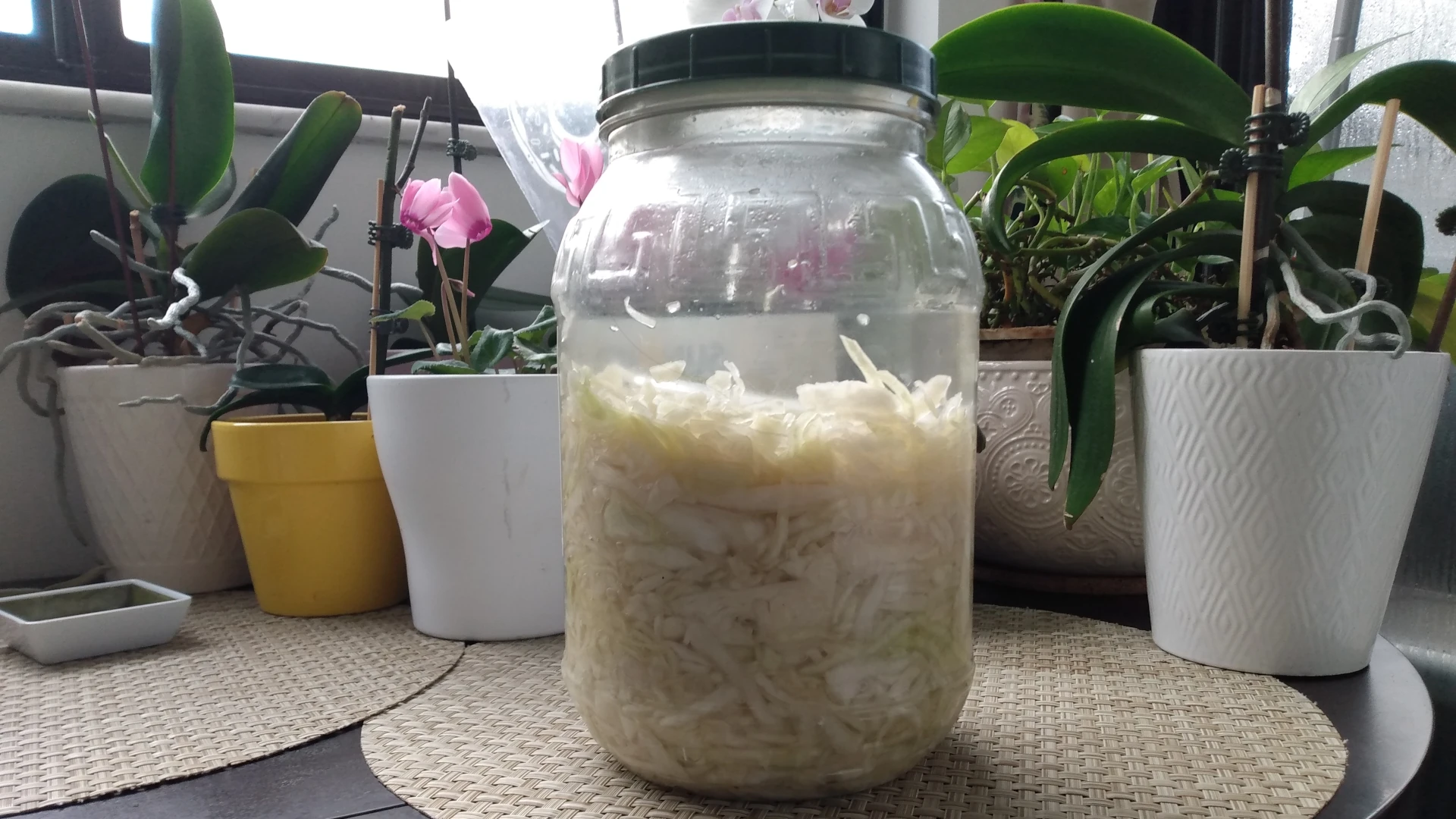
Sauerkraut Ingredients
- 1 medium head of green cabbage (about 2–3 lbs / 1-1.4 kg)
- Optional add for extra flavour 1 tsp caraway seeds, juniper berries, grated apple, ….
- Percentages of salt vegetables
- (1 ½ to 2 tablespoons of fine sea salt or canning salt non-iodized)
- For accuracy, use grams and a digital scale.
- Standard Sauerkraut common range. 2.0% is milder, 2.5% is crunchier and more traditional.
- Formula: Vegetable Weight x Percentage = Salt Weight
- Example: For a 1 kg total weight at 2.5%, add 25g of salt.
Equipment:
- Large mixing bowl
- Clean 1-quart (1-liter) or larger glass jar, crock, or fermentation vessel
- Smaller jelly jar or glass weight that fits inside your main jar
- Cloth cover (coffee filter, paper towel, or clean tea towel)
- Rubber band or jar ring
Instructions
- Prepare the Cabbage
- Remove any damaged outer leaves from the cabbage. Set one nice, large leaf aside.
- Quarter the cabbage, cut out the core, and slice it thinly. A chef’s knife, mandolin, or food processor with shredder attachment.
- Place the shredded cabbage in your large mixing bowl.
- Salt and Massage
- Sprinkle the salt over the cabbage. If adding any optional flavourings.
- Begin massaging and squeezing the cabbage with your hands, ideally do not where gloves the bacteria Lactobacillus is on your hands. You’ll see the cabbage start to wilt, release liquid (brine), and reduce in volume significantly. The brine should cover the cabbage when pressed.
- Pack the Jar
- Grab handfuls of cabbage and tightly pack them into your clean jar. Press down firmly with your fist or a tamper as you go to eliminate air pockets and encourage more brine to rise.
- Once all cabbage is packed, the brine should completely cover it. If not, make a little extra brine by dissolving 1 tsp salt in 1 cup of warm water and adding just enough to cover.
- Take the reserved whole cabbage leaf, fold it, and place it on top of the shredded cabbage to act as a “plug” that helps keep shreds submerged.
- Place your smaller glass jar or fermentation weight on top to keep everything under the brine. This is crucial. Exposure to air can cause mould.
- Ferment
- Cover the jar with a cloth and secure it with a rubber band. This allows gases to escape while keeping dust and bugs out.
- Place the jar on a small plate or tray (to catch any potential overflow) in a cool, dark spot (60-70 °F / 15-21 °C is ideal).
- Let it ferment. Check it every day or two, pressing down the weight to keep the cabbage submerged. You’ll see bubbles—a sign of healthy fermentation! A little white foam or scum on top is normal; just skim it off.
- Taste and Store
- Start tasting after 5–7 days. The sauerkraut is ready when it’s pleasantly tangy and sour to your liking. In cooler temperatures, this can take 2–4 weeks.
- Once it’s reached your preferred flavour, remove the weight and the top leaf. Seal the jar with a lid and store it in the refrigerator.
- Refrigerated, your homemade sauerkraut will keep for at least 6 months and continue to develop flavour slowly.
Fermented
Cultures and fermented foods has a long history. The Roman writer to describe the making of sauerkraut by preserving cabbage in salt and stored in earthen vessels. Fermented cabbage also at East Asian. If there was salt production, then there was preservation.
Leave a Reply